
Published on
June 9, 2026
Share on
.svg)
.svg)
.svg)

.png)
In my previous article, I declared that “Institutional Knowledge is Walking Out the Door—How to Capture It Before It’s Gone,” and we explored how standardized workflows act as the backbone of a resilient municipality. However, even the most robust processes are vulnerable if they exist solely as "tribal knowledge" held by a few veteran employees.
As we approach the latter half of the 2020’s, local governments are facing what researchers call the "Silver Tsunami." According to the MissionSquare Research Institute, nearly 54% of state and local government employees are considering retirement or leaving their jobs in the near term (MissionSquare, 2025). When these individuals depart, they don’t just leave a vacancy; they take the city’s operational memory with them. This "turnover tax" creates a silent crisis of inefficiency, legal liability, and eroded public trust.
The cost of losing a key staff member is rarely confined to the expense of a job posting. Industry data from the Society for Human Resource Management (SHRM) suggests that the total cost of replacement—including recruitment, training, and lost productivity—ranges from 90% to 200% of an employee’s annual salary (SHRM, 2023). In other words, a role that would typically pay $100,000 will now cost anywhere from $90,000 to $200,000 to replace. That is a devastating hit to the annual budget.
When a senior staffer leaves, the remaining team must absorb their workload. This leads to burnout—the primary driver for secondary turnover in the public sector. Research indicates that it typically takes 6 to 18 months for a new government professional to reach the same competency level as their predecessor (Government Executive, 2023). During this "onboarding gap," the municipality effectively pays 100% of a salary for 50–70% of the historical output.
Consistency is arguably the primary defense against litigation in municipal governance. If a new hire interprets a zoning code or building ordinance differently than it has been applied for several decades, it creates a "precedent gap." This opens the door for developers and property owners to sue under the "Arbitrary and Capricious" standard. A single lost land-use lawsuit can cost a municipality hundreds of thousands of dollars in damages and legal fees—costs that typically far exceed the implementation of a knowledge management system.
Without a centralized knowledge base, new staff members spend valuable hours (and taxpayer dollars) researching past decisions, previous vendor contracts, or project histories that a veteran would have known instantly. The International City/County Management Association (ICMA) identifies a number of succession planning “pitfalls” in an article called Succession Planning Made Easier (ICMA, 2025).
When a department loses its "anchor" employees without a transfer system in place, it enters a dangerous feedback loop often referred to in organizational psychology as "Organizational Amnesia" compounded by "Turnover Contagion."
The loss of knowledge doesn't hit every department equally. We must examine the specific "leakage points" in local government operations:
To solve the crisis of knowledge loss, local governments must transition from a model that relies on individual experts (Heroes) to one that relies on robust, accessible systems.
Identify which roles in your organization are "Single Points of Failure." If one person leaving would paralyze a department, that is a high-risk area.
As discussed in my previous article, municipalities must move beyond job descriptions to "User Manuals."
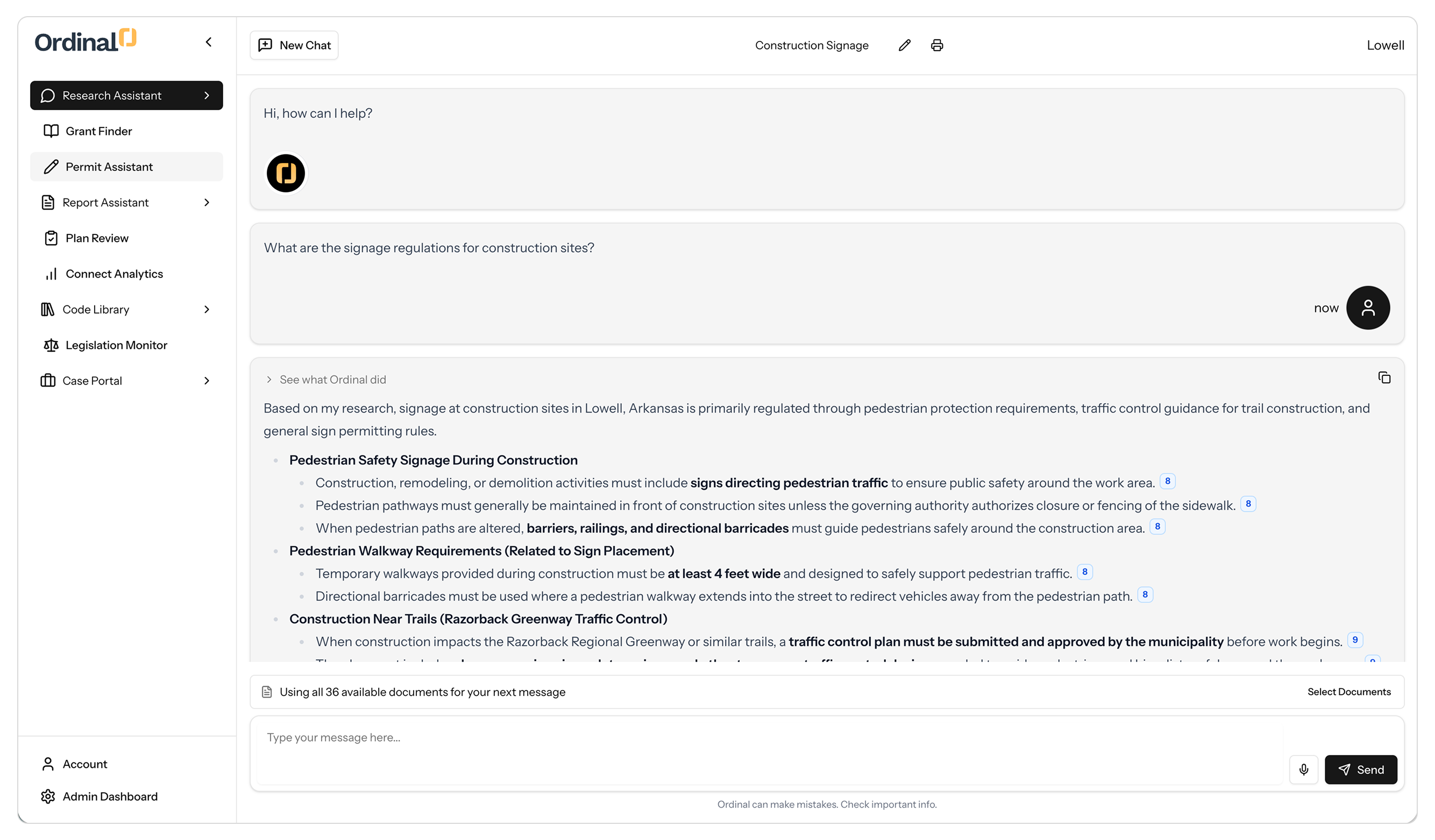
This is where technology serves as the ultimate safety net. Tools like Ordinal allow a city to digitize its specific regulatory environment.
Knowledge transfer cannot happen in a two-week notice period.
Institutional knowledge is a public asset, much like a bridge or a water treatment plant. When we allow it to crumble through neglect, the community pays the price in inefficiency and legal risk.
By investing in systems that capture, store, and distribute this knowledge, local governments can ensure that their operations are resilient. The goal is a government that is people-powered but system-supported, ensuring the mission of serving the public continues uninterrupted, regardless of who holds the title on the office door.


Ready to see Ordinal in action? Book some time with our team and we’ll show you just how valuable this could be for you and your staff.

We create innovative solutions that simplify complexities and empower success for communities everywhere.


Copyright 2025 - BreakGround Technologies


